While traveling and studying in D.C. this last winter, I attended a few lectures by Dr. Ross Baker, a notable political scientist. Dr. Baker categorized past Presidents and the current Presidential candidates as either an architect or an engineer, a visionary or a mechanic. Dr. Baker suggested that in times of disarray and economic retraction Americans tend to choose engineers for functionality in order to run the country, and in times of change and stagnation we tend to choose architects as leaders that embody a vision and offer a grand picture for the future of America.
This theory of his will surely be tested in the coming months as America weighs in on the decision to vote for the representatives of each major political party of whom they would most like to see run for president. In Iowa, America saw record breaking voter turnout, mostly due to first time caucus goers. As the results of the Iowa caucus came in, it was a surprising victory on both sides of the party lines. Senator Barack Obama won the democratic primary by a significant margin and Senator Mike Huckabee won the republican primary by beating the favored candidate Senator Mitt Romney by a smaller but still significant percentage. These results while surprising to the political analysts who predicted months prior that Senator Clinton would win by a margin of as much as 10 points, and that Mitt Romney who spent nearly 7 million dollars of his own money just on media advertisement for his campaign, seemed almost prophetic of the nature of the unpredictability of independent states such as Iowa, and for Dr. Ross Baker, it appeared to be convincing evidence to support his theories of choice by Americans.
Still the jury should be out on the reliability of Dr. Baker’s theory until all the cards have been counted. Some preliminary data is available and does show that just like Iowa, New Hampshire also had large turnout for the primary with voters showing a genuine interest and enthusiasm for the first truly open primary to occur in 50 or so years.
As President Bush is constitutionally ineligible to run again and the nation seems to be in a time of transition, it is no surprise that the recent turnouts are higher than expected. I have faith in Americans, that they will in times of important transition, rise up to the occasion and do what is necessary to ensure that America sails in what they feel is the right direction.
After some initial polls returned data, it appeared that the analysts were wrong once again, but Dr. Baker’s theory was affected less than the ego and pride of the fortune tellers of politics. So, now with about half of the states down, the results are beginning to be slightly mixed when it comes to who America chooses in particular times.
The results of the state primaries would suggest that America has matured into a nation that accepts and embraced racial and gender differences, while at the same time yearns for new direction and leadership from its representatives. It seems from the results of both these early state primaries, we are going to need to wait till the rest of the states primaries are concluded and the votes are tallied before we confirm that Dr. Baker can pigeon hole all the Presidents and the American voters decision into only two options, that of an architect of ideas or an engineer who can fix the machine. It seems obvious who the architect is and who the visionary is...but who do we choose, and why do we choose them I think is still not as simple as the two career options may suggest.
by Eric M. Rosenberg
Tuesday, February 12, 2008


Wednesday, February 6, 2008
THE FREAKSHOW IN YOUR HOME
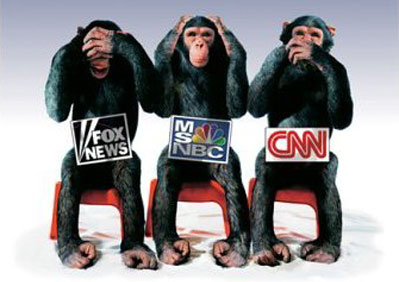
The Freak Show is alive, thundering through the airwaves, satellite signals, landlines, fiber optic cables and the ink laden pages of periodicals and daily reads and eventually into your home. It has a voice, the blended sounds of the media voices, the political pundits, the commentary laden public and the political candidates who maneuver in the Freak Show arena. I first learned of the term "Freak Show" after reading Mark Halperin's book, The Way To Win: Taking the White House in 2008. I gained a solid understanding of it's presence and control of politics today while studying in D.C. this past winter. Yet the Freak Show finds it's origins much earlier than my discovery a few months ago. It was born in the 1990’s during the Clinton years, its name an epiphany that sprung from a collection of screaming commentary over the Monica Lewinsky scandal that seemed to represent the time period.
The Freak Show is a powerful, influential and destructive environment that is the true enemy of ideas. It has a tendency to polarize and exert its destructive power through personal attacks with the help of corruptive incentives such as money and votes.
It has grown with the evolving technology of each generation and has matured through the destabilization of the genre of Old political media. As the 1990’s saw the decline of the Old Media (broadcast television newspapers and weekly periodicals) and the subsequent rise of the New Media (internet, talk radio and cable) the effects of the Freak Show can be seen through the polarization within the electorate and the ruthless attacks on political candidates and the division of voters into varying camps of unified resentment.
The Freak Show has many players that contribute to its turbulent environment, none more recognizable than Matt Drudge. It is a veritable sea that political candidates must navigate by learning its coveted trade secrets in order to survive any election and succeed at gaining the benefits that the Freak Show offers. In other words, the Freak Show only allows for two possible positions, a candidate both adheres to certain behavior and tactics and benefits from the Freak Show or they do not and they in turn become a victim of its wrath.
In light of the most recent campaigns for the presidential nominations for both parties in the United States it is clear that the Freak Show is healthy and growing, fed by interest groups, campaign finance laws that channel money, the reduction in the number of moderates in Congress and the slow death of any Old media attempts to actually cover real news, ergo Brittany Spears.
Unfortunately, the extreme behavior that is a trademark of the Freak Show will continue into the election of 2008. With this premise in mind, if the recent candidates wish to navigate the Freak Show Sea they must adhere to regimented candidate behavior. Surprisingly it appears as if a few of the candidates have taken note. In the begining, Barack Obama resisted the Freak Show rules and was punished heavily as he did not respond effectively to the attacks of Hillary Clinton, but that soon changed. Hillary on the other hand was well aware of the Freak Show and used it most effectively, hitting when it counted, holding back when it was prudent, and releasing a story in the form of a tear at the perfect moment in her campaign.
Although the practical answer to how a candidate must behave does depend on the political party they represent given a slight advantage to conservative candidates, it is universal that both sides must have a plan to navigate the Freak Show and use it to their advantage. Candidates must favor attack on opponents and endorse sensation rather than substance; they must also favor moral judgments from a personal derivative. They must show interest in serious policies, stay loyal to natural allies, put people first, respond quickly to any allegations with aggressive rebuttal and shift the focus back to key policy issues. Candidates must show they are tough and have the fortitude to lead. It seems that overall, candidates must remember that image is everything, protect it at all costs, do it with a moral and reserved tone from a standpoint that shifts focus always back to policy issues at hand and derives its structure from personal experience and long-standing principles. Whomever does this most effectively will surely win the nomination.
The Freak Show has proven to be durable if anything. It was born in the Clinton years, but persists through today and has affected the current democratic and republican campaign. The incentives in the media, the culture of political attack, the polarization of the political bases and the hunger for scandal all mark the effects of the Freak Show on the 2008 campaign. The platforms of the frontrunners are based specifically from the results of the success or failure of the early years of Freak Show politics. The New Media has gained a foothold in Freak Show politics and the campaigns of 2008 reflect this change. Many candidates have raised millions on the Internet; every candidate has a website, bloggs, and caters to the new technological advancements of the New Media while at the same time they do not dismiss the Old Media. It is evident that the Freak Show is alive and well in the 2008 campaign, and it seems that it is not going anywhere, for now.
Subscribe to:
Posts (Atom)


