The world we live in now is globalizing at a rapid pace, ushering in a new era of technology that is revolutionizing almost every aspect of life. Technology has reached a pinnacle level in the global landscape. It is a part of nearly every aspect of everyday life, and even more now a part of the governments and militaries of the world over. Computers have become a necessary part of our world, assisting in almost all transactions, data transmissions, information storage, normal and strategic operations of major infrastructures, military operations and productivity, and have established themselves in a host of other critical arenas of our lives.
While computers have made life easier for millions of people worldwide, they do not come without their pitfalls. The advent of integrated computer systems and networks has given rise to the Internet, one of the tools for which society has connected itself with and through. With the benefits we receive from this new technology, societies have at the same time accepted its risks. Society and governments have built a reliance on these technologies and that has made them vulnerable to foreign and domestic attack.
The Internet has opened a gateway for one’s enemies to attack and disrupt in a new and potentially devastating way. In a recent publication on Cyber-warfare, The Center for the Study of Technology and Society explains, “…however, once the Internet became an international phenomenon, its main asset (decentralized communication) became a potential Achilles’ Heel”. It is clear that some form of the internet is here to stay, and it must be understood that if it stays unregulated in its current form then its vulnerabilities are here to stay as well.
As an open portal for access to major sectors of our society and the world over, the internet has become a focus for governments, militaries, terrorists, organized crime, domestic and foreign businesses, NGO’s, IGO’s and individuals. As a result of the interest in this decentralized form of communication, the internet should be a topic of major concern for the International community. The internet, which has potentially billions of users and has connected the world in a way never seen before, has at the same time become a focus of attention for use in attacking and harming others (states, individuals, and businesses) by implementing devices and tactics as a means of disrupting enemies, whatever the actor and cause they represent may be.
Cyber-warfare, the focus of this report, is a new form of war that has been birthed by the advent of the Internet. This emerging threat has created a new battlefield where wars are already being fought. It has its origins in the revolutionary technologies of the 20th century and is a host to various motivations and actors alike. Utilizing such methods as Web vandalism, disinformation campaigns, the gathering of secret data, disruption of military operations in the field, and by attacking critical infrastructure, entities and individuals can destabilize and damage their targets as effectively as employing bombs or weapons of mass destruction, at less than half the costs. Governments and businesses can engage in espionage now without ever leaving the confines of their offices and countries of origin. Individuals can now wreak havoc to any target by the simple act of a keystroke while sitting in their living rooms. Cyber-warfare even threatens the very sacred notion of state sovereignty as international bodies are forced to grapple with concepts such as aggressive acts of war versus espionage.
Cyber-warfare is a reality, and it is creating an emerging legal conundrum for domestic and international governing bodies. Thus far, the international community has yet to create a coherent body of laws that cover specifically information operations. As of today there are no real or clear legal pathways to deal with or even address the intricacies of cyber-warfare. This is where I will make my suggestions to International Law for the benefit of peace and security within the International Community. Throughout this essay I will make many suggestions to help the International Community establish a coherent body of documents to refer to when looking at cyber-warfare as well as a way to eventually develop a legal framework for states and actors to follow. It is clear that International Law is in need of a clear path to dealing with cyber-warfare and a way to categorize the information operations that are conducted by actors in the international community.
This new battlefield has future implications that society is only beginning to realize. Cyber-warfare’s effects will change the global landscape and shape the future of business, law and warfare itself. It is this new threat to international peace and security that looms on the forefront of our future in this technologically dependent world. Cyber-warfare is poised to become a menace to society if not taken seriously by those responsible for our protection.
The world is in dire need of a solution to this new threat, and as this is a global matter, it is clear that the time for a convention on cybercrime is at hand. As of 2000, only negotiations for a convention on cybercrime were in progress under the guidance of the Council of Europe, with U.S. participation. It is now up to the International community to develop a body of coherent distinctions and laws that can govern information and internet operations to ensure that if a belligerent uses information technologies to cause harm, these acts can be sufficiently evaluated under the laws of war and relevant humanitarian laws.
The process of determining appropriate definitions and laws governing cyber-warfare and establishing permanent bodies to have jurisdiction over this arena will take time and until a conclusion to these matters can be reached, we as an international community will still need a way to address this topic. In my opinion, the current Geneva Convention with special attention to article 51 in conjunction with international common law, the humanitarian principles under the laws of war, and the past rulings by international bodies on proportionality and necessity should be the governing entities of cyber-warfare until conclusive and permanent institutions of oversight and governance can be established.
Cyber-Warfare: Intro to Topic
Our information technologies and technology dependent infrastructures demand attention from those who provide security and create and appropriate policy for the protection of the United States as well as the International Community. Cyber-warfare is a new reality, and a new threat to our way of life that must be addressed, on a level that rivals the threat posed from weapons of mass destruction. Yet because this threat is little understood by most, the threat is not yet taken as seriously as it should be by those in power, especially on the international level.
Most people can tell you what weapons of mass destruction are, and they can easily see the threat that they pose as a device designed for harm and subsequently most people can also explain what cyber-warfare is on a general level, but almost none of them grasp the extent to which cyber-warfare can cause damage. When discussing cyber-warfare it is necessary to understand what exactly “cyber-war” is. Most would agree that cyber-warfare is the use of computers and the Internet in conducting warfare in cyberspace by application of destructive force on various systems and institutions. The general term as described here is at its most basic level, the foundation for defining cyber-warfare and cyber-attacks. The Center for the Study of Technology and Society explains more clearly that the conventional definitions of war (an armed conflict between nations) and terrorism (potentially motivated violence aimed to influence an audience) do not strictly apply, so “cyber-warfare” and “cyber-terrorism” are often used as an umbrella term for electronic attacks that are not merely criminal in nature. Many nations and non-governmental actors have and will continue to use computer networks to stage attacks against their oppositional targets, and not just within sectors that one might expect.
For years, information and its transmission has been a central component of government and military activity as well as an asset to all parts of the business and political arenas. It is understood by experts that critical information must move from place to place even if an entire region and its computers are destroyed. This concept is what led to the development of the Internet. Originally designed and used as a military tool, the Internet has grown and spread into the private and business sectors of everyday life. Now it is in almost every home and business in the United States (including the government) and essentially the world for that matter which is the major reason the international community needs to face this new threat to peace and security head on as soon as possible.
The Internet is now accessible to anyone with a computer and modem and it provides a direct link to the United States, or any country for that matter, at multiple levels. Nations and NGO’s or NGA’s can and have used cyber-warfare to inflict damage to the major nations of the world and the threat is just now beginning to be realized. Cyber-warfare is extremely complex and is difficult to identify, calculate damage caused by attacks, determine intent, and assess when a calculated attack is underway. It is for this reason that important questions need to be answered concerning codified definitions of acts and operations, states’ rights to/for defense, remedies to damage, techniques for mitigating destruction, prevention, international legal classifications, jurisdiction of entities to govern cyber-war in order to ensure compliance with international laws and treaties, and finally the legal ramifications when violations of international laws occur.
Cyber-warfare Defined
Although the first task that the international community should do is create a legal body that could began the process of accepting definitions for the internet domain and cyber-war, as well as determining where each case would be reviewed and where jurisdiction will reside, this matter is a presumption that will be discussed later in the essay. First, it is beneficial to establish basic understandings and definitions for various aspects of cyber-warfare and attacks.
As defined earlier in the introduction, cyber-warfare or sometimes termed information warfare or information operations has been used in respect to military techniques that target opponents various electronic infrastructures. Information operations, or specifically the physical attacks on information systems, psychological operations, jamming of radar and radio signals and even some forms of “hacking”, have been employed on numerous occasions by multiple actors for some time now. This has led some, including myself, to consider these types of actions as “traditional”, subject to the international laws of war, to include the principle of distinguishing between combatants and non-combatants. It is important for us to understand the various ways that actors conduct cyber-warfare. There are many ways that one’s enemies can conduct cyber-warfare including but not limited to:
1. Web Vandalism: Foreign opponents can deactivate or deface government or military Web pages. As well as attack public sites and businesses.
2. Using Disinformation Campaigns: The Internet is a popular tool for finding news, and can be used to spread mis- and disinformation to affect a population’s beliefs or psychology. The net can also be used as a platform for rhetoric to incite and or mobilize sympathizers.
3. Gathering of Secret Data: Classified information that is not handled securely can be intercepted and tampered with. Foreign espionage has always been a threat, but now there is a less a need for operatives to be at risk in order to infiltrate a location.
4. Disruption in the field: Military activities that are carefully coordinated and dependent upon electronic communications transmitted over computers and satellites can be disrupted. Opponents can block, intercept and re-direct these vital communications, or pollute them with false orders or responses severely endangering the soldiers and missions.
5. Attacking critical infrastructure: Many components of a national critical infrastructure- electricity, water, fuel, communications, and transportation- are surprisingly vulnerable to concerted electronic attack. Serious domestic disasters, including financial meltdown, are very possible.
These are only some of the new developing threats that cyber-warfare presents to the global landscape and the technologically dependent future. It is clear how vulnerable the world is to this new threat, as well as the potential that cyber-warfare has to inflict catastrophic damage to our country and any country connected to a decentralized communication web.
Now that the methods of attack have been discussed we can look at some of the structures that may be targeted and the means by which they may target them. The earlier definition of cyber-attack also includes a list of possible targets and describes an introduction to computer network attacks popularly known as “hacking”. The previous definition which includes offensive information warfare is that it refers to the application of digital force against military or civilian information assets and systems, against computers and networks which support the air traffic control systems, stock transactions, financial records, currency exchanges, Internet communications, telephone switching, credit record, credit card transactions, the space program, the railroad system, the hospital systems that monitor patients and dispense drugs, manufacturing process control systems, newspaper and publishing, the insurance industry, power distribution and utilities, all of which rely heavily on computers. This list above involves civilian and government systems, and involves systems that may span across traditional border boundries of other countries. For these reasons, it is important that the international community look to the Geneva Convention, the traditional laws of war and the humanitarian laws and treaties for any aspect of cyber-war and cyber-attacks. This matter is not simply segregated to the militaries or governments of the world.
As for the issue surrounding “hacking”, this too should fall under the auspices of the Geneva Convention and the laws of war. The act of “hacking” seems to be a tricky subject and one that is hard to pinpoint when looking for actors involved and their motivations. Thus, “hacking should be treated as a criminal matter that can have international legal implications if evidence suggests state sponsored involvement in the “hacking”. Since “hacking” can be perpetrated by private and governmental actors, it must be accountable in both domestic and international courts. Countries, under Article 51 of the Geneva Convention can employ defensive means when “hacking” is underway, but should refrain from offensive operations until the incident can be reviewed by an appropriate body. Since the effects of “hacking” can be great, this is even more reason for an expeditious formation of laws and conventions for dealing with this threat.
As countries realize the implications of international attention to state sponsored acts of cyber-attack, the possibility for war by proxy will increase dramatically. For this reason, cyber-warfare and cyber-attacks should be classified as a form of “asymmetrical warfare”. Cyber-warfare is a direct threat to state sovereignty and thus should be considered under current laws of war as an aggressive, planned attack against another country that is on the same level as nuclear warfare. This distinction could reduce the willingness of states to sponsor or participate in cyber-warfare, then limiting the occurrences to simple cases of criminal “hacking”. As the damage from this warfare can be extensive, it is also necessary that the matter be evaluated within the context and jurisdiction of the laws of war until such time that a convention can determine the appropriate arena for jurisdiction. The fact that there exists a distinction between combatants and non-combatants that is internationally recognized, leads to the understanding that any cyber-attack that effects or involves either designation would be subject to the laws governing war as expressed in the international laws of war. No state or individual actor can then legally claim any other laws as governing these types of activities.
Cyber-war Evidence
The U.S. government and other governments as well as their militaries have been studying the existence of cyber-warfare for years. The U.S. Joint Vision 2020 report was quoted as noting that operations within the information domain will become as important as those conducted in the domain of sea, land, air, and space. The threat of cyber-warfare is now a reality, as the war is on the verge of entering the stage of “full-swing”. John Hamre was quoted as stating to Congress that we are at war right now and that we are effectively in a cyber-war.
Last year alone, the Defense Department was targeted by hackers nearly 75,000 times, which led the military in a response to form the Joint Functional Component Command for Networks Warfare. Along with these attacks, China is reportedly developing a fourth branch of the People’s Liberation Army that is devoted solely to cyber-warfare and it has been rumored to be engaged in “sniping” with Taiwan and attacks against the U.S. have been traced back to China. In 1999, according to expert testimony before the Senate, a band of Russian hackers were responsible for stealing an enormous amount of research and development secrets from U.S. corporate and government entities in an operation that was nicknamed by American Intelligence as codename Moonlight Maze. Even recently, the Associated Press reported a Romanian national was indicted on charges of hacking into more than 150 U.S. government computers causing disruptions that cost NASA, the Energy Department and the Navy nearly $1.5 million. Evidence for the start of this new type of warfare is clear and present, signaling the beginning of a new era of combat and clearly marking the need for an international consensus on rules governing cyber-warfare and cyber-attacks.
Case Studies
As of today there are multiple cases involving cyber-attacks that have made their way to various courts:
Air Force Rome Lab (1994):
In March of 1994, system administrators at Rome Lab in New York found their network under attack. The Air Force dispatched teams to investigate and traced the attacks to an ISP in New York, then Seattle, Washington. Two hacker handles were identified as Kuji and Datastream Boy. Informants recognized the hackers from the United Kingdom and the U.S. military contacted Scotland Yard. Scotland Yard discovered that the hacker was “phreaking” (using a computer to trick phone lines) through Columbia and Chile to New York, defrauding telephone companies and the New York ISP as a jumping off point to attack Rome Lab. The hacker was under surveillance by Scotland Yard and was observed targeting NATO Headquarters, Goddard Space Flight Center, and Wright-Patterson Air Force Base. Over eight countries were used as conduits for these systematic attacks. An arrest warrant was finally issued after the hackers stole data from the South Korean Atomic Research Institution. After evidence was presented, over 150 intrusions were monitored by Rome Lab from 100 different points of origin. Datastream Cowboy, a 16 year old British student pled guilty in British courts and was issued a fine. His mentor, Kuji, who turned out to be a 22 year old Israeli technician was found not guilty as no laws in Israel applied to this incident.
Eligible Receiver (1997):
This was the first Information Warfare exercise in the United States which demonstrated the ease and vulnerability of civilian and governmental systems to cyber-attacks. It could be viewed as a wake-up call to the international community that is concerned with international terrorism and proxy warfare.
Over a period of 90 days, thirty-five people calling themselves “The Red Team”, using off-the-shelf technology and software, posed as a rogue state that, while rejecting direct military confrontation with the United States, attacked vulnerable U.S. information systems. Goals of the Red Team included concealing their identity and to delay or deny any U.S. ability to respond militarily. A number of attacks were made against power and communications networks in Oahu, Los Angeles, Colorado Springs, and St. Louis, Chicago, Detroit, Washington, DC, Fayetteville, and Tampa.
Although many of the results of the simulation are still classified, Gen. Campbell, head of the Pentagon’s Joint Task Force-Computer Network Defense wrote that Eligible Receiver demonstrated our lack of preparation for coordinated cyber-attacks and attacks on civilian infrastructure. Many other experts have since commented on Eligible Receiver as a revealing exercise, demonstrating that we must be better prepared to deal with potential attacks against governments and civilians alike.
The examples above clearly demonstrate the need for involvement by the international community as this is a global issue. As technology allows attacks to touch multiple countries and can affect civilian infrastructure, the issue now involves state sovereignty and the laws of war and the Geneva Convention.
Conclusions
The cyber-war is raging on right now, but the sounds of its weapons are not the percussion from the explosion of bombs, but rather the sound of constant tapping from the keys on a computer keyboard. The evidence of this war clearly points to a significant threat to our military and our society as well as the international community as a whole. Cyber-warfare is taking shape and will surely transform the militaries and the policies of world governments as they must adapt to this new technology and tool of war. Governments seem to be taking this threat very seriously and the hope is that politicians and the world will too. Jason Lee Miller, a writer for Security Pro News wrote recently that in a pre-internet world, no country was under constant attack with bombs bursting at the gates 24/7. But this is what that amounts to, and the international governing bodies need to be vigilant about protection.
Cyber warfare is the way of future world wars, involving lightning fast ways of taking down entire infrastructures. Governments must be prepared to defend against this threat, and at the same time, they must be able to inflict the equivalent amount of damage to an enemy by the same means. As governments and militaries vamp up their cyber-warfare abilities and defenses, the international governing bodies must keep up with developing laws and rules to ensure that peace and security is maintained.
America is taking steps towards this direction, although they have yet to fully commit enough resources to handle this new threat appropriately. Still, even as a few governments seem willing to endorse international conventions on cyber-warfare, at the same time they are moving to develop ways at fighting a cyber-war rather than preventing one. Reuters reported that the Defense Department was considering hacking into Serbian computer networks to disrupt operations and basic civilian services…but the Pentagon refrained from doing so because of uncertainties and limitations surrounding the emerging field of cyber-warfare. As computers are revolutionizing all aspects of life, militaries around the world are stepping up the development of cyber weapons and defense systems. Soldiers at computer terminals, safely stationed in the United States, can now defend our country and invade foreign networks to shut down electrical facilities, telephone services, transportation and crash financial systems. CNN News reported this month that the U.S. Air Force is setting up a new four-star command to fight in cyberspace. The news source reported:
“The aim is to develop a major command that stands alongside Air Force Space Command and Air Combat Command as the provider of forces that the President, combatant commanders and the American people can rely on for preserving the freedom of access and commerce, in air, space and now cyberspace” this is according to Air Force Secretary Michael Wynne at an industry conference.
It is clear that the military recognizes the threat and the potential for weaponry that cyber-warfare presents to the future. In December of 2005, the Air Force mission statement was amended to include cyberspace as an operational area, along with air and space. This is exactly the things that the United States military and government need to began to do to prepare to deal with this new type of warfare and this is exactly the reason that we need an international governing body that can deal with cyber-warfare. As this is not yet in existence, it is essential that cyber-warfare be under the auspices of the laws of war and the Geneva Conventions.
Still, even as the military is slowly taking notice and responding to the threat of cyber-warfare, it and the government and businesses of the United States are not moving quickly enough to safeguard against this dangerous threat. The 8th Air Force Commander Lt. Gen. Robert Elder noted that although the focus of U.S. efforts until now has been on defense, we’ve come to realize there are a lot of things that we can do in the cyberspace domain that would be good for national security.
The different branches of our defenses are taking notice and mobilizing forces to deal with this threat, but it needs to be coordinated, funded and enacted faster than it is currently. The focus of the defense department should revolve around a standardization of operations, finding and training personnel, making the case to politicians for more resources, and educating the public as well as private business of this new threat and how to prevent it from damaging private civilian sectors. We need to protect our data, and eliminate the chances that adversaries have at attacks by detecting, denying, disrupting, and destroying their source of transmissions. But at the same time, the United States should be adamant about involving international agencies and governing bodies in the development of this new arena.
Congress seems to be making some progress toward this goal. Currently awaiting passage is a house bill, the Cybersecurity Information Act, which would reduce the liability and antitrust action, while strengthening the responsibility of private business to maintain adequate security of information. It is also the responsibility of Congress to appropriate the necessary funds needed to deal with this new war and emerging threat appropriately before we have a major unexpected catastrophic event like 9-11 or Pearl Harbor. Also, the president passed E.O. PDD-63 which calls for the national government to control and secure infrastructures from both physical and cyber-attacks. The plan which is extensive, details the creation of an agency dedicated to the security and coordination of sectors of infrastructure that are vulnerable to cyber-attacks. It also details the need for coordinated efforts between multiple agencies and potentially international agencies for the protection of civilian infrastructure. This could be a model for a future agency or coordinated efforts within the international community to protect civilian infrastructure worldwide.
Still, with the threat of full scale cyber-war, and the constant bombardment of hacking attacks to U.S. systems, we must venture into this emerging threat with caution and regard for current policies and rules of engagement. Before the United States engages in cyber-warfare, the legalities and potential consequences of such coordinated attacks should be weighed. In 2000, the Defense Departments top legal office issued a series of guidelines warning that misuse of cyber attacks could subject U.S. authorities to war crime charges. The U.S. and the governments of the world must still apply the same “law of war” principles to cyber-warfare as they do to conventional warfare, avoiding collateral damage and indiscriminate attacks. This would mitigate violations of human rights and war crime laws while setting standards to establish appropriate world policy for cyber-warfare that currently does not exist.
The untested state of U.S. and other world powers “cyber arsenals” should motivate policymakers to create laws and institute policy that addresses this new type of warfare. Thus far the U.S. appears to be leading the world in this mission. Near the end of 2000, the Pentagon issued a fifty page document containing guidelines that instructed commanders to be wary of targeting civilian institutions such as banking systems, stock exchanges and universities regardless of the bloodless effect of cyber weapons. Yet not all governments would agree with the U.S. guidelines for rules of conduct for this new type of warfare. The Post noted in an article in 2000 when referring to these codes of warfare for the U.S. that Russia is challenging this view. Other countries such as China, have not openly opposed the rules for conduct, but have declined to comment on the issue, leaving their ambivalence as a sign that they do not intend to honor such rules. On the other hand, some countries have chosen to take another approach by gathering support for a United Nations resolution calling for guidelines on this type of warfare and the banning of dangerous information weapons. All these differing stances outline the marks of a political and military battle that is going to be a major issue for the coming future.
The emerging threat of our future and the future of our children is no longer that of only bombs and bullets, but now includes the virtual world of cyberspace. A new threat has emerged with the integration of technology into all aspects of our lives. The technology that has made our lives so much better has not come without its risks and trade-offs. Opening our military and our critical infrastructures to the Internet has made them vulnerable to attack from our enemies domestically and abroad.
The consequences of coordinated attacks in cyberspace has prompted the militaries of the world to label and design a new type of warfare, aptly named cyber-warfare. The weapons of this war do not explode, or rip or tear at our flesh, but instead maim and rip and tear at our very critical infrastructures that we depend so dearly upon. The militaries and the governments of the world have begun to respond to this new threat with the formation of Internet Warfare units and policies that are starting to take aim at this emerging threat.
In December, the FBI was initiated into this war as it began to issue levels of warnings for the threat of cyber attacks from potential hackers. As has been demonstrated, the internet is here to stay and so is our need for technology to operate our society. What we must do now is recognize the vulnerabilities that this dependence has created and we must act quickly to create policies and safeguards to defend against the new threats posed by cyber-warfare.
Cyber-warfare and cyber-attacks are a new threat to society, but these types of warfare should not be viewed as deviating from “traditional”. This is simply a new way to attack and harm others and is thus subject to all the laws of war and the Geneva Conventions. Until a legitimate and legal international body is formed, conventions attended and ratified, and definitions and laws codified and enacted, cyber-warfare and cyber-attacks must be subject to international law and the laws of war. Individuals must comply with the Geneva Convention and be subject to the punishments of violating humanitarian laws if civilians are harmed by the effects of cyber-warfare. A new ear is upon us and the international community must move quickly to ensure peace and security remains intact, lest we fall victim to a lesser known destructive force, that of cyber-war.
Tuesday, February 24, 2009


Tuesday, January 27, 2009
America's Little Dragon: Singapore and the fight against terrorism.
Many have only heard of Singapore in reference to the famous drink the "Singapore Sling" named after the tiny bustling island nation. Located in Southeast Asia, Singapore is little known to the majority of westerners, although it is very well known to the estimated 7000 multi-national corporations that operate out of the conservate yet business friendly city-state.
So what does Singapore have to do with the fight against terrorism, or in Middle East politics for that matter? Well, let me enlighten you to a much overlooked aspect of U.S. policy decisions in respect to Asia and the Middle East.
Due to Singapore’s strategic location on major sea lanes, combined with an industrious population has given the country a unique economic importance in Southeast Asia that is disproportionate to its small size. According to the State Department of the United States, in response to its lack of natural resources, Singapore adopted a pro-business, pro-foreign investment, export-oriented economic policy framework . Thus, the United States has maintained formal diplomatic relations with Singapore since 1965 following its independence. The subsequent efforts by the Singapore government to maintain economic growth and political stability, in conjunction with its pro-business, pro-foreign investment policy framework have created a solid basis for the harmonious relations with the United States. Singapore has produced real growth that averaged eight percent from 1969 to 1999, reaching a high of ten percent by the year 2000. The effects of this growth have been directly influential to the position that Singapore holds in regards to America’s presence in Southeast Asia, making Singapore the United States’ strongest supporter in the region.
Singapore boasts one of the most conservative societies of Southeast Asia, and many of the politicians subsequently view jihadi groups as a prime security threat, a worldwide view it shares equally with Washington. Yet even before the emergence of jihadi groups to the region, Singapore viewed the U.S. presence in the Asia-Pacific as crucial to its security and regional stability. Perceived threats from the Soviet Union, a growing Chinese military, and a nearby Japan loomed heavily in the minds of the little island. With the emergence of global terrorist organizations, and the spread of Al Qaeda's ties in Southeast Asia, Singapore became even more influential in American foreign policy.
To compliment the economic relationship between America and Singapore, the government of Singapore and its citizens for the most part, also support a strong American military presence in Asia. In June 2004 at the annual International Institute for Strategic Studies conference in Singapore, Secretary of Defense Donald H. Rumsfeld acknowledged “our steadfast friends here in Singapore” in the context of facing terrorism and other security challenges.
The United States and Singapore have come to view each other as vital partners, especially in regards to regional security and the “war on terrorism”. In 2000, Lee Hsien Loong, the Prime Minister of Singapore, told the Williamsburg Conference that “no other country can substitute for the U.S.”. In 2005, not long after the Prime Minister made public Singapore’s ardent support for the United States, the two governments signed a Strategic Framework Agreement that updated a 1990 Memorandum of Understanding allowing U.S. military forces to exercise with Singaporean forces.
Recently, as of June of this year, the Singapore Armed Forces, the United States Navy, and the United States Coast Guard are all participating in the annual U.S.-Singapore Cooperation Afloat Readiness and Training exercise , the fourteenth exercise of the series that began in 1995. Additionally, according to the U.S. Department of Defense, Singapore hosts between eighty and one hundred U.S. Navy ship visits per year. Complimenting the Naval ship visits, Singapore has constructed a new dock on the Changi Naval Pier for U.S. carriers as well as extended the runway at the Changi International Airport out to the dock. Officials from the U.S. Navy noted that, “It will be the only facility where planes can be off-loaded from carriers in this part of the world” . Clearly Singapore has taken major steps in ensuring the United States remains an active presence in Southeast Asia.
So, after all that, I will address the fact that Singapore is and will continue to be a major influence for U.S. policy in both Southeast Asia and in regards to the Middle East. Next time a policy is enacted, look for the connection to Singapore, I'm sure you will not be dissapointed.
So what does Singapore have to do with the fight against terrorism, or in Middle East politics for that matter? Well, let me enlighten you to a much overlooked aspect of U.S. policy decisions in respect to Asia and the Middle East.
Due to Singapore’s strategic location on major sea lanes, combined with an industrious population has given the country a unique economic importance in Southeast Asia that is disproportionate to its small size. According to the State Department of the United States, in response to its lack of natural resources, Singapore adopted a pro-business, pro-foreign investment, export-oriented economic policy framework . Thus, the United States has maintained formal diplomatic relations with Singapore since 1965 following its independence. The subsequent efforts by the Singapore government to maintain economic growth and political stability, in conjunction with its pro-business, pro-foreign investment policy framework have created a solid basis for the harmonious relations with the United States. Singapore has produced real growth that averaged eight percent from 1969 to 1999, reaching a high of ten percent by the year 2000. The effects of this growth have been directly influential to the position that Singapore holds in regards to America’s presence in Southeast Asia, making Singapore the United States’ strongest supporter in the region.
Singapore boasts one of the most conservative societies of Southeast Asia, and many of the politicians subsequently view jihadi groups as a prime security threat, a worldwide view it shares equally with Washington. Yet even before the emergence of jihadi groups to the region, Singapore viewed the U.S. presence in the Asia-Pacific as crucial to its security and regional stability. Perceived threats from the Soviet Union, a growing Chinese military, and a nearby Japan loomed heavily in the minds of the little island. With the emergence of global terrorist organizations, and the spread of Al Qaeda's ties in Southeast Asia, Singapore became even more influential in American foreign policy.
To compliment the economic relationship between America and Singapore, the government of Singapore and its citizens for the most part, also support a strong American military presence in Asia. In June 2004 at the annual International Institute for Strategic Studies conference in Singapore, Secretary of Defense Donald H. Rumsfeld acknowledged “our steadfast friends here in Singapore” in the context of facing terrorism and other security challenges.
The United States and Singapore have come to view each other as vital partners, especially in regards to regional security and the “war on terrorism”. In 2000, Lee Hsien Loong, the Prime Minister of Singapore, told the Williamsburg Conference that “no other country can substitute for the U.S.”. In 2005, not long after the Prime Minister made public Singapore’s ardent support for the United States, the two governments signed a Strategic Framework Agreement that updated a 1990 Memorandum of Understanding allowing U.S. military forces to exercise with Singaporean forces.
Recently, as of June of this year, the Singapore Armed Forces, the United States Navy, and the United States Coast Guard are all participating in the annual U.S.-Singapore Cooperation Afloat Readiness and Training exercise , the fourteenth exercise of the series that began in 1995. Additionally, according to the U.S. Department of Defense, Singapore hosts between eighty and one hundred U.S. Navy ship visits per year. Complimenting the Naval ship visits, Singapore has constructed a new dock on the Changi Naval Pier for U.S. carriers as well as extended the runway at the Changi International Airport out to the dock. Officials from the U.S. Navy noted that, “It will be the only facility where planes can be off-loaded from carriers in this part of the world” . Clearly Singapore has taken major steps in ensuring the United States remains an active presence in Southeast Asia.
So, after all that, I will address the fact that Singapore is and will continue to be a major influence for U.S. policy in both Southeast Asia and in regards to the Middle East. Next time a policy is enacted, look for the connection to Singapore, I'm sure you will not be dissapointed.
Tuesday, February 12, 2008
The Final Four: Form or Function?
While traveling and studying in D.C. this last winter, I attended a few lectures by Dr. Ross Baker, a notable political scientist. Dr. Baker categorized past Presidents and the current Presidential candidates as either an architect or an engineer, a visionary or a mechanic. Dr. Baker suggested that in times of disarray and economic retraction Americans tend to choose engineers for functionality in order to run the country, and in times of change and stagnation we tend to choose architects as leaders that embody a vision and offer a grand picture for the future of America.
This theory of his will surely be tested in the coming months as America weighs in on the decision to vote for the representatives of each major political party of whom they would most like to see run for president. In Iowa, America saw record breaking voter turnout, mostly due to first time caucus goers. As the results of the Iowa caucus came in, it was a surprising victory on both sides of the party lines. Senator Barack Obama won the democratic primary by a significant margin and Senator Mike Huckabee won the republican primary by beating the favored candidate Senator Mitt Romney by a smaller but still significant percentage. These results while surprising to the political analysts who predicted months prior that Senator Clinton would win by a margin of as much as 10 points, and that Mitt Romney who spent nearly 7 million dollars of his own money just on media advertisement for his campaign, seemed almost prophetic of the nature of the unpredictability of independent states such as Iowa, and for Dr. Ross Baker, it appeared to be convincing evidence to support his theories of choice by Americans.
Still the jury should be out on the reliability of Dr. Baker’s theory until all the cards have been counted. Some preliminary data is available and does show that just like Iowa, New Hampshire also had large turnout for the primary with voters showing a genuine interest and enthusiasm for the first truly open primary to occur in 50 or so years.
As President Bush is constitutionally ineligible to run again and the nation seems to be in a time of transition, it is no surprise that the recent turnouts are higher than expected. I have faith in Americans, that they will in times of important transition, rise up to the occasion and do what is necessary to ensure that America sails in what they feel is the right direction.
After some initial polls returned data, it appeared that the analysts were wrong once again, but Dr. Baker’s theory was affected less than the ego and pride of the fortune tellers of politics. So, now with about half of the states down, the results are beginning to be slightly mixed when it comes to who America chooses in particular times.
The results of the state primaries would suggest that America has matured into a nation that accepts and embraced racial and gender differences, while at the same time yearns for new direction and leadership from its representatives. It seems from the results of both these early state primaries, we are going to need to wait till the rest of the states primaries are concluded and the votes are tallied before we confirm that Dr. Baker can pigeon hole all the Presidents and the American voters decision into only two options, that of an architect of ideas or an engineer who can fix the machine. It seems obvious who the architect is and who the visionary is...but who do we choose, and why do we choose them I think is still not as simple as the two career options may suggest.
by Eric M. Rosenberg
This theory of his will surely be tested in the coming months as America weighs in on the decision to vote for the representatives of each major political party of whom they would most like to see run for president. In Iowa, America saw record breaking voter turnout, mostly due to first time caucus goers. As the results of the Iowa caucus came in, it was a surprising victory on both sides of the party lines. Senator Barack Obama won the democratic primary by a significant margin and Senator Mike Huckabee won the republican primary by beating the favored candidate Senator Mitt Romney by a smaller but still significant percentage. These results while surprising to the political analysts who predicted months prior that Senator Clinton would win by a margin of as much as 10 points, and that Mitt Romney who spent nearly 7 million dollars of his own money just on media advertisement for his campaign, seemed almost prophetic of the nature of the unpredictability of independent states such as Iowa, and for Dr. Ross Baker, it appeared to be convincing evidence to support his theories of choice by Americans.
Still the jury should be out on the reliability of Dr. Baker’s theory until all the cards have been counted. Some preliminary data is available and does show that just like Iowa, New Hampshire also had large turnout for the primary with voters showing a genuine interest and enthusiasm for the first truly open primary to occur in 50 or so years.
As President Bush is constitutionally ineligible to run again and the nation seems to be in a time of transition, it is no surprise that the recent turnouts are higher than expected. I have faith in Americans, that they will in times of important transition, rise up to the occasion and do what is necessary to ensure that America sails in what they feel is the right direction.
After some initial polls returned data, it appeared that the analysts were wrong once again, but Dr. Baker’s theory was affected less than the ego and pride of the fortune tellers of politics. So, now with about half of the states down, the results are beginning to be slightly mixed when it comes to who America chooses in particular times.
The results of the state primaries would suggest that America has matured into a nation that accepts and embraced racial and gender differences, while at the same time yearns for new direction and leadership from its representatives. It seems from the results of both these early state primaries, we are going to need to wait till the rest of the states primaries are concluded and the votes are tallied before we confirm that Dr. Baker can pigeon hole all the Presidents and the American voters decision into only two options, that of an architect of ideas or an engineer who can fix the machine. It seems obvious who the architect is and who the visionary is...but who do we choose, and why do we choose them I think is still not as simple as the two career options may suggest.
by Eric M. Rosenberg
Wednesday, February 6, 2008
THE FREAKSHOW IN YOUR HOME
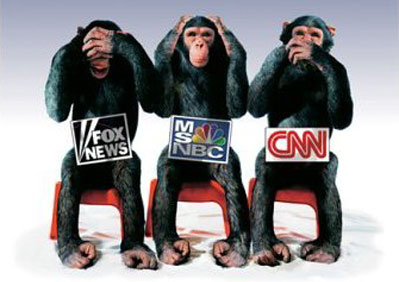
The Freak Show is alive, thundering through the airwaves, satellite signals, landlines, fiber optic cables and the ink laden pages of periodicals and daily reads and eventually into your home. It has a voice, the blended sounds of the media voices, the political pundits, the commentary laden public and the political candidates who maneuver in the Freak Show arena. I first learned of the term "Freak Show" after reading Mark Halperin's book, The Way To Win: Taking the White House in 2008. I gained a solid understanding of it's presence and control of politics today while studying in D.C. this past winter. Yet the Freak Show finds it's origins much earlier than my discovery a few months ago. It was born in the 1990’s during the Clinton years, its name an epiphany that sprung from a collection of screaming commentary over the Monica Lewinsky scandal that seemed to represent the time period.
The Freak Show is a powerful, influential and destructive environment that is the true enemy of ideas. It has a tendency to polarize and exert its destructive power through personal attacks with the help of corruptive incentives such as money and votes.
It has grown with the evolving technology of each generation and has matured through the destabilization of the genre of Old political media. As the 1990’s saw the decline of the Old Media (broadcast television newspapers and weekly periodicals) and the subsequent rise of the New Media (internet, talk radio and cable) the effects of the Freak Show can be seen through the polarization within the electorate and the ruthless attacks on political candidates and the division of voters into varying camps of unified resentment.
The Freak Show has many players that contribute to its turbulent environment, none more recognizable than Matt Drudge. It is a veritable sea that political candidates must navigate by learning its coveted trade secrets in order to survive any election and succeed at gaining the benefits that the Freak Show offers. In other words, the Freak Show only allows for two possible positions, a candidate both adheres to certain behavior and tactics and benefits from the Freak Show or they do not and they in turn become a victim of its wrath.
In light of the most recent campaigns for the presidential nominations for both parties in the United States it is clear that the Freak Show is healthy and growing, fed by interest groups, campaign finance laws that channel money, the reduction in the number of moderates in Congress and the slow death of any Old media attempts to actually cover real news, ergo Brittany Spears.
Unfortunately, the extreme behavior that is a trademark of the Freak Show will continue into the election of 2008. With this premise in mind, if the recent candidates wish to navigate the Freak Show Sea they must adhere to regimented candidate behavior. Surprisingly it appears as if a few of the candidates have taken note. In the begining, Barack Obama resisted the Freak Show rules and was punished heavily as he did not respond effectively to the attacks of Hillary Clinton, but that soon changed. Hillary on the other hand was well aware of the Freak Show and used it most effectively, hitting when it counted, holding back when it was prudent, and releasing a story in the form of a tear at the perfect moment in her campaign.
Although the practical answer to how a candidate must behave does depend on the political party they represent given a slight advantage to conservative candidates, it is universal that both sides must have a plan to navigate the Freak Show and use it to their advantage. Candidates must favor attack on opponents and endorse sensation rather than substance; they must also favor moral judgments from a personal derivative. They must show interest in serious policies, stay loyal to natural allies, put people first, respond quickly to any allegations with aggressive rebuttal and shift the focus back to key policy issues. Candidates must show they are tough and have the fortitude to lead. It seems that overall, candidates must remember that image is everything, protect it at all costs, do it with a moral and reserved tone from a standpoint that shifts focus always back to policy issues at hand and derives its structure from personal experience and long-standing principles. Whomever does this most effectively will surely win the nomination.
The Freak Show has proven to be durable if anything. It was born in the Clinton years, but persists through today and has affected the current democratic and republican campaign. The incentives in the media, the culture of political attack, the polarization of the political bases and the hunger for scandal all mark the effects of the Freak Show on the 2008 campaign. The platforms of the frontrunners are based specifically from the results of the success or failure of the early years of Freak Show politics. The New Media has gained a foothold in Freak Show politics and the campaigns of 2008 reflect this change. Many candidates have raised millions on the Internet; every candidate has a website, bloggs, and caters to the new technological advancements of the New Media while at the same time they do not dismiss the Old Media. It is evident that the Freak Show is alive and well in the 2008 campaign, and it seems that it is not going anywhere, for now.
Sunday, January 21, 2007
THE SECRET WAR
ALERT!! READ THIS POST AT YOUR OWN RISK.
Threats facing the United States and the global world of the near future:
The over dependency on technology and abundance of information obtained by private firms vs. the ability of the United States to maintain the security of its citizens and its’ secrets from non-state actors and other Governments who can purchase information from these businesses.
Remember the phrase, "Big Brother, Big Business"
America is now in a digital era: The majority of transactions are done electronically, the entire economy is digitized, the U.S. is increasingly digitizing documents and correspondence, car manufactures and mortgage companies compile data on record levels.
Private firms are collecting more and more data from multiple areas of the private and governmental sector. They are motivated by profit and are not as liable for security nor interested, for the most part, in the protection of this data at the level the government is.
The ability of non-governmental actors to use technology to thwart U.S. interests domestically and abroad will surely increase as it is a means that has yet to be fully realized as a target.
China is already involved in massive technological attacks against other countries such as Japan and the U.S.. Chinese hackers have even shut down the Japanese economy in recent attacks(RED HACKER’S ALLIANCE). More to come...
According to the AFP, this May, Chinese hackers have attacked over 1000 U.S. websites in what was called a “cyber-war”, in response to the US spy plane stuck on southern Hainan island after a mid-air collision with a Chinese jet. This is just the tip of the iceberg.
Imagine if the NYSE was shut down by foreign hackers trained in the U.S. and employed by an organization like Al Qaeda or a country such as IRAN. CYBER-MERCENARIES...
Warnings of cyberwarfare and cyberterrorism have fallen on deaf ears, mostly because there's yet to be a publicized coordinated attack that causes significant damage to critical infrastructure or economic targets This is exactly what happened before Sept. 11th as the government did not act quickly enough for how large and imminent the threat actually was.
There is a growing list of cyberwars currently happening: Israelis and Palestinians attack each other's Web sites and critical nodes. India and Pakistan frequently exchange digital fire. Chechen rebels throw cyberbombs at their Russian rulers. China routinely spars with its neighbors Taiwan, Japan and South Korea. The U.S. is both attacked by and attacks multiple entities around the world, including some of it's allies. And the list goes on.
The CIA and other government agencies are warning against the increased threat of terrorism, but neither the National Infrastructure Protection Center nor the White House's Office of Homeland Security would comment on the issues of the cyberwar threat.
Civilian targets are more vulnerable and tempting for hackers, especially since most of the nation's critical infrastructure is privately controlled. Utilities (power, water, communications), transportation and commercial supply chains are all operated and secured by private corporations.
State-sponsored cyberwar is only part of the threat, says Tom Kellerman, a data risk specialist at the World Bank's Financial Strategy and Policy Sector. Hostilities in the Middle East could inspire hacker and organized crime groups to infiltrate U.S. government and corporate networks. Also, hostile nation-states might test U.S. cyberdefenses...
Shall I go on?
Now that you have been breifed on the threats of our digital world, read the other articles by Eric M. Rosenberg and keep checking the weekly roost for more... You have been warned. Now get informed.
-THE ROOSTER
Threats facing the United States and the global world of the near future:
The over dependency on technology and abundance of information obtained by private firms vs. the ability of the United States to maintain the security of its citizens and its’ secrets from non-state actors and other Governments who can purchase information from these businesses.
Remember the phrase, "Big Brother, Big Business"
America is now in a digital era: The majority of transactions are done electronically, the entire economy is digitized, the U.S. is increasingly digitizing documents and correspondence, car manufactures and mortgage companies compile data on record levels.
Private firms are collecting more and more data from multiple areas of the private and governmental sector. They are motivated by profit and are not as liable for security nor interested, for the most part, in the protection of this data at the level the government is.
The ability of non-governmental actors to use technology to thwart U.S. interests domestically and abroad will surely increase as it is a means that has yet to be fully realized as a target.
China is already involved in massive technological attacks against other countries such as Japan and the U.S.. Chinese hackers have even shut down the Japanese economy in recent attacks(RED HACKER’S ALLIANCE). More to come...
According to the AFP, this May, Chinese hackers have attacked over 1000 U.S. websites in what was called a “cyber-war”, in response to the US spy plane stuck on southern Hainan island after a mid-air collision with a Chinese jet. This is just the tip of the iceberg.
Imagine if the NYSE was shut down by foreign hackers trained in the U.S. and employed by an organization like Al Qaeda or a country such as IRAN. CYBER-MERCENARIES...
Warnings of cyberwarfare and cyberterrorism have fallen on deaf ears, mostly because there's yet to be a publicized coordinated attack that causes significant damage to critical infrastructure or economic targets This is exactly what happened before Sept. 11th as the government did not act quickly enough for how large and imminent the threat actually was.
There is a growing list of cyberwars currently happening: Israelis and Palestinians attack each other's Web sites and critical nodes. India and Pakistan frequently exchange digital fire. Chechen rebels throw cyberbombs at their Russian rulers. China routinely spars with its neighbors Taiwan, Japan and South Korea. The U.S. is both attacked by and attacks multiple entities around the world, including some of it's allies. And the list goes on.
The CIA and other government agencies are warning against the increased threat of terrorism, but neither the National Infrastructure Protection Center nor the White House's Office of Homeland Security would comment on the issues of the cyberwar threat.
Civilian targets are more vulnerable and tempting for hackers, especially since most of the nation's critical infrastructure is privately controlled. Utilities (power, water, communications), transportation and commercial supply chains are all operated and secured by private corporations.
State-sponsored cyberwar is only part of the threat, says Tom Kellerman, a data risk specialist at the World Bank's Financial Strategy and Policy Sector. Hostilities in the Middle East could inspire hacker and organized crime groups to infiltrate U.S. government and corporate networks. Also, hostile nation-states might test U.S. cyberdefenses...
Shall I go on?
Now that you have been breifed on the threats of our digital world, read the other articles by Eric M. Rosenberg and keep checking the weekly roost for more... You have been warned. Now get informed.
-THE ROOSTER
Saturday, January 20, 2007
A Time to Spy
Every once in a while I come across a story that reminds me of how the average person with grounded principles can rise to the occasion and do something extraordinary, not for riches or fame, but instead risks all that they have to fight for the suffering. This is one of those rare special stories.
“My objective was to shorten the war and to help spare the unfortunate people in the concentration camps further suffering.”- Fritz Kolbe
Affixed to the door of one of the conference rooms in the German foreign ministry building is a name, that according to Tony Paterson, most Germans have never even heard of. Fritz Kolbe is the name on this door, representing a small unassuming middle-aged man who became, by his own accord, one of the most important spies of WWII. As a diplomatic courier for the Nazi regimes foreign ministry, Kolbe functioned as a major source for the allied forces by passing documents to American intelligence completely undetected until the end of the war. Despite the lack of recognition and being dismissed as a traitor by successive German governments after the war, Kolbe never once regretted his participation in spying against his own country, and for according to himself, “shortening the war” for his countrymen.
Fritz Kolbe has been described by the CIA as quote, “the most important spy of the Second World War”. Kolbe was a little known name until the publication of original documents and private letters by the CIA in 2000 that prompted a review by the German government and Foreign Minister Joschka Fischer who named the conference room after Kolbe. To those who knew him, Kolbe was a mild natured man who kept mostly to himself while living in Germany during the rise of the Nazi regime. Originally recruited at the age of 25 and employed as a junior diplomat for the German foreign ministry before the Second World War, Kolbe worked primarily out of Madrid and Cape Town. Eventually the Nazi regime took power in Germany, but Kolbe adamantly refused to join and was subsequently re-assigned as a lowly clerical employee and stationed in Berlin around 1939. While working in Berlin Kolbe was responsible for stamping passports and visas at the ministry under the command of Von Ribbentrop. For the first few years after the start of the war, Kolbe was an “underground” critic of the Nazi regime and occasionally distributed anti-Nazi leaflets in telephone boxes around Berlin. It wasn’t until November of 1941 that Kolbe became committed to the protest of the Nazi regime. After a meeting with the now famous anti-Nazi surgeon Ferdinand Sauerbruch, he learned of the Nazi program to systematically murder thousands of mentally ill and “undesirables”, and it was then that Kolbe became a determined resistor to the Nazi party. Yet it was not until 1943 that Kolbe got his chance to make a significant impact on the war against his own country. Around August of 1943, a fellow Nazi critic and superior to Kolbe put him on a list of “privileged” individuals permitted to act as couriers for the Third Reich.
Kolbe made his first attempt at treason on August 15th, 1943 when he locked himself in his office at the foreign ministry and strapped two large envelopes filled with mimeographed secret documents to his inner legs. He then traveled aboard a Nazi train to the Swiss capital of Berne with a bag full of official Nazi dispatches. After delivering his documents he went immediately to the British embassy to attempt to make contact as a spy, but was laughed at and promptly dismissed. Undeterred and fueled by a moral obligation to humanity, Kolbe went to the Americans, who were quick to trust him initially, as they realized the potential he had for vital intelligence. By 1944, it was evident to the Americans the value that Kolbe had for the Allied forces.
Fritz Kolbe was given the code name “George Wood” by the Office of Strategic Services and assigned agent Allen Welsh Dulles as his official handler. Regular meetings occurred between Dulles and Kolbe until the end of the war. It is believed that by the end of the war Kolbe passed a total of 2,600 documents to the Allied forces. Most of this information became vital to the eventual outcome of the war. Some of the documents Kolbe passed included the details of the German expectation of the site of the D-day landings, V-1 and V-2 rocket programs, the Messerschmitt Me 262 jet fighter, Japanese plans in Southeast Asia, and the exposure of the Nazi agent, Elyse Bazna, who was working in the British embassy in Ankara. Although this information was extremely valuable, its impact could have been far greater had the Americans not been overly cautious with the fear that Kolbe was a double agent. Kolbe it seems was compelled to spy on his country by a genuine commitment to humanity and he adamantly refused to accept any payment for his activities during the war. Although commendable in retrospect, the effect of his refusal of compensation is most likely the reason for the suspicion of his loyalty to the allied forces.
Despite the fears of the OSS, the documents passed on by Kolbe, at great risk to his own life, were extremely valuable. Allen Welsh Dulles, Kolbe’s handler who later became the first civilian Director of the CIA and member of the Warren Commission noted, “The risks Kolbe took were incalculable…I just hope that the injustice done to him will be reversed one day and that his country recognizes his true role”. After the war successive German governments painted Kolbe as a traitor and his attempts to rejoin the foreign ministry in 1949 were rejected. Kolbe then tried to come to the U.S. to settle but was unable to find “suitable” work. He was ultimately forced to work as a chainsaw salesman for an American company in Switzerland until his death in 1971. Only until recently has Kolbe been realized as a hero for what he has done. In 2004, the French Historian Lucas Delattre wrote a book entitled, Fritz Kolbe, the Second World War’s Most Important Spy, which has managed to affect the German public and spark a transition in the perception of Kolbe in German hearts and minds. It is not enough that the Germans know of their countrymen’s fight for humanity, but we Americans too owe Fritz Kolbe the honor of remembrance of a hero. It is important that we see from looking at Kolbe’s life the understanding that it is not only with guns that wars can be fought. We all must do what we can to make a difference, never losing sight of our moral obligation to humanity, even when the enemy is your own people. We must put humans first, when we do this, our paths will be as clear as day, and the future will remember us as heroes.
-The Rooster.
by: Eric M. Rosenberg
“My objective was to shorten the war and to help spare the unfortunate people in the concentration camps further suffering.”- Fritz Kolbe
Affixed to the door of one of the conference rooms in the German foreign ministry building is a name, that according to Tony Paterson, most Germans have never even heard of. Fritz Kolbe is the name on this door, representing a small unassuming middle-aged man who became, by his own accord, one of the most important spies of WWII. As a diplomatic courier for the Nazi regimes foreign ministry, Kolbe functioned as a major source for the allied forces by passing documents to American intelligence completely undetected until the end of the war. Despite the lack of recognition and being dismissed as a traitor by successive German governments after the war, Kolbe never once regretted his participation in spying against his own country, and for according to himself, “shortening the war” for his countrymen.
Fritz Kolbe has been described by the CIA as quote, “the most important spy of the Second World War”. Kolbe was a little known name until the publication of original documents and private letters by the CIA in 2000 that prompted a review by the German government and Foreign Minister Joschka Fischer who named the conference room after Kolbe. To those who knew him, Kolbe was a mild natured man who kept mostly to himself while living in Germany during the rise of the Nazi regime. Originally recruited at the age of 25 and employed as a junior diplomat for the German foreign ministry before the Second World War, Kolbe worked primarily out of Madrid and Cape Town. Eventually the Nazi regime took power in Germany, but Kolbe adamantly refused to join and was subsequently re-assigned as a lowly clerical employee and stationed in Berlin around 1939. While working in Berlin Kolbe was responsible for stamping passports and visas at the ministry under the command of Von Ribbentrop. For the first few years after the start of the war, Kolbe was an “underground” critic of the Nazi regime and occasionally distributed anti-Nazi leaflets in telephone boxes around Berlin. It wasn’t until November of 1941 that Kolbe became committed to the protest of the Nazi regime. After a meeting with the now famous anti-Nazi surgeon Ferdinand Sauerbruch, he learned of the Nazi program to systematically murder thousands of mentally ill and “undesirables”, and it was then that Kolbe became a determined resistor to the Nazi party. Yet it was not until 1943 that Kolbe got his chance to make a significant impact on the war against his own country. Around August of 1943, a fellow Nazi critic and superior to Kolbe put him on a list of “privileged” individuals permitted to act as couriers for the Third Reich.
Kolbe made his first attempt at treason on August 15th, 1943 when he locked himself in his office at the foreign ministry and strapped two large envelopes filled with mimeographed secret documents to his inner legs. He then traveled aboard a Nazi train to the Swiss capital of Berne with a bag full of official Nazi dispatches. After delivering his documents he went immediately to the British embassy to attempt to make contact as a spy, but was laughed at and promptly dismissed. Undeterred and fueled by a moral obligation to humanity, Kolbe went to the Americans, who were quick to trust him initially, as they realized the potential he had for vital intelligence. By 1944, it was evident to the Americans the value that Kolbe had for the Allied forces.
Fritz Kolbe was given the code name “George Wood” by the Office of Strategic Services and assigned agent Allen Welsh Dulles as his official handler. Regular meetings occurred between Dulles and Kolbe until the end of the war. It is believed that by the end of the war Kolbe passed a total of 2,600 documents to the Allied forces. Most of this information became vital to the eventual outcome of the war. Some of the documents Kolbe passed included the details of the German expectation of the site of the D-day landings, V-1 and V-2 rocket programs, the Messerschmitt Me 262 jet fighter, Japanese plans in Southeast Asia, and the exposure of the Nazi agent, Elyse Bazna, who was working in the British embassy in Ankara. Although this information was extremely valuable, its impact could have been far greater had the Americans not been overly cautious with the fear that Kolbe was a double agent. Kolbe it seems was compelled to spy on his country by a genuine commitment to humanity and he adamantly refused to accept any payment for his activities during the war. Although commendable in retrospect, the effect of his refusal of compensation is most likely the reason for the suspicion of his loyalty to the allied forces.
Despite the fears of the OSS, the documents passed on by Kolbe, at great risk to his own life, were extremely valuable. Allen Welsh Dulles, Kolbe’s handler who later became the first civilian Director of the CIA and member of the Warren Commission noted, “The risks Kolbe took were incalculable…I just hope that the injustice done to him will be reversed one day and that his country recognizes his true role”. After the war successive German governments painted Kolbe as a traitor and his attempts to rejoin the foreign ministry in 1949 were rejected. Kolbe then tried to come to the U.S. to settle but was unable to find “suitable” work. He was ultimately forced to work as a chainsaw salesman for an American company in Switzerland until his death in 1971. Only until recently has Kolbe been realized as a hero for what he has done. In 2004, the French Historian Lucas Delattre wrote a book entitled, Fritz Kolbe, the Second World War’s Most Important Spy, which has managed to affect the German public and spark a transition in the perception of Kolbe in German hearts and minds. It is not enough that the Germans know of their countrymen’s fight for humanity, but we Americans too owe Fritz Kolbe the honor of remembrance of a hero. It is important that we see from looking at Kolbe’s life the understanding that it is not only with guns that wars can be fought. We all must do what we can to make a difference, never losing sight of our moral obligation to humanity, even when the enemy is your own people. We must put humans first, when we do this, our paths will be as clear as day, and the future will remember us as heroes.
-The Rooster.
by: Eric M. Rosenberg
Subscribe to:
Posts (Atom)


